Experts have demarcated a 100-meter perimeter for the site, which was registered on the National Heritage List in 1997, the Persian service of the Mehr News Agency reported on Wednesday.
Any construction done on this perimeter is illegal, however, construction of buildings has increased in the vicinity of the boundary.
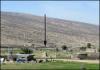
The first breach of the site’s perimeter was done by the regional electrical supplier when they installed a power line some 4 meters from the tomb a few years ago.
Known as Gur-Dokhtar by the local people, the site was discovered in 1960 by Belgian archaeologist Louis Vandenberg, who believed the tomb belonged to Cyrus I.
In addition, a number of experts have said that Mandane, mother of Cyrus the Great, is buried at the site, but other scholars believe that the tomb belongs to Atossa, the daughter of Cyrus.
Built of 24 pieces of stone, the structure is very similar in architecture to the tomb of Cyrus the Great at Pasargadae in Fars Province. However, it is several times smaller than the Cyrus Tomb.
The tomb is 4.5 meters in height and contains a small pool.
A team of Iranian experts led by Hassan Rahsaz conducted a series of restoration efforts on the structure in early 2000’s.
MMS/YAW
END
MNA
























Your Comment